
World War 1 Story (1914–1918)
The Spark that Ignited the War
On June 28, 1914, a bright summer day in Sarajevo, Bosnia, Archduke Franz Ferdinand—the heir to the Austro-Hungarian throne—was visiting the city with his wife, Sophie. As their car moved slowly through the streets, a group of Serbian nationalists waited.
Suddenly, Gavrilo Princip, a young nationalist, stepped out and fired two bullets. Both the Archduke and his wife were killed. This tragic event shocked Europe. Austria-Hungary, furious with Serbia, declared war.
What seemed like a small regional conflict quickly pulled the whole world into war.
In this post,we have to post about world war 1. Let us see about world war 1.
World War I: A Comprehensive Overview
World War I, also known as the Great War, lasted from 1914 to 1918. It was a global conflict that involved many countries and empires, resulting in massive human suffering, economic devastation, and widespread destruction.
Causes and Start of the War
The war started on July 28, 1914, when Austria-Hungary declared war on Serbia, following the assassination of Archduke Franz Ferdinand. The complex system of alliances, imperialism, nationalism, and militarism created an atmosphere of tension that eventually led to the outbreak of war.
Course of the War
The war was fought on multiple fronts, including the Western Front in France and Belgium, the Eastern Front in Russia, and the Italian Front in Italy. The war saw the introduction of new technologies, including tanks, machine guns, and poison gas, which led to massive casualties.
Problems Faced by Normal People
During the war, normal people faced numerous problems, including:
- Loss of loved ones: Millions of people lost their family members, friends, and loved ones.
- Displacement and refugees: Many people were forced to flee their homes and become refugees.
- Food shortages and famine: Food shortages and famine were widespread, leading to malnutrition and starvation.
- Disease and illness: The war led to the spread of diseases, including the Spanish flu pandemic.
- Economic hardship: The war disrupted economies, leading to inflation, unemployment, and poverty.
Damages and Consequences
The war resulted in massive damages and consequences, including:
- Loss of human life: An estimated 37 million people died, including both military personnel and civilians.
- Destruction of infrastructure: Cities, towns, and villages were destroyed, leading to a massive rebuilding effort.
- Economic devastation: The war disrupted global trade, leading to economic instability and recession.
- Rise of new global powers: The war marked the rise of new global powers, including the United States.
- Treaty of Versailles: The Treaty of Versailles imposed harsh penalties on Germany, contributing to widespread resentment and laying the groundwork for World War II.
End of the War
The war finally came to an end on November 11, 1918, with the signing of the Armistice. The Treaty of Versailles was signed on June 28, 1919, officially ending the war.
The war had a profound impact on the world, leading to widespread destruction, human suffering, and economic devastation. It also laid the groundwork for World War II and shaped the course of modern history.
Conclusion
World War I was a pivotal moment in modern history, marked by unprecedented destruction, loss of life, and widespread suffering. The war’s complex causes, including imperialism, nationalism, and militarism, ultimately led to a global conflict that reshaped the world order.
The war’s impact on civilians and soldiers alike was devastating, with millions killed, wounded, or displaced. The Treaty of Versailles imposed harsh penalties on Germany, contributing to ongoing tensions that would eventually lead to World War II.
The legacy of World War I continues to shape global politics, international relations, and our understanding of the human cost of conflict. By studying this pivotal moment in history, we can gain valuable insights into the importance of diplomacy, cooperation, and working towards peace.
The War Spreads Across Nations
- Russia supported Serbia.
- Germany declared war on Russia and France.
- Britain entered the war when Germany invaded Belgium.
Soon, Europe was divided into two powerful alliances:
- Allies – Britain, France, Russia, Italy, and later the USA.
- Central Powers – Germany, Austria-Hungary, Ottoman Empire, and Bulgaria.
The fighting spread from France and Belgium (Western Front) to Russia (Eastern Front), Italy, and even the Middle East and Africa.
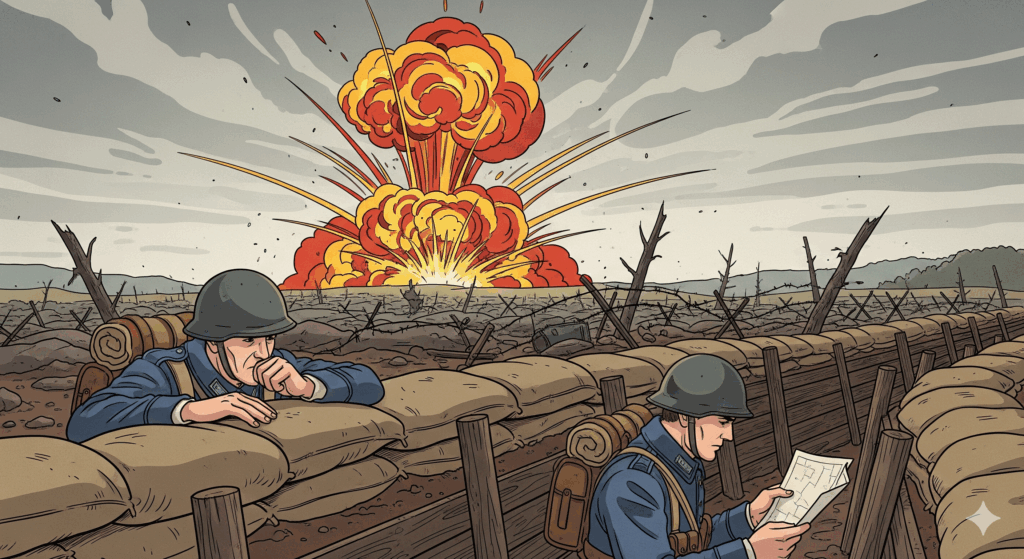
Life in the Trenches
World War I became infamous for trench warfare. Soldiers dug long, narrow ditches for protection. But life in the trenches was harsh:
- Constant mud, cold, and rain
- Rats, lice, and disease
- Endless artillery bombardments
- Deadly poison gas attacks
Soldiers spent weeks in these dangerous conditions, facing fear every moment.
New Technologies of War
World War I was the first conflict to see modern technologies on such a large scale:
- Tanks that crossed rough battlefields
- Machine guns that could fire hundreds of rounds per minute
- Poison gas like mustard gas
- Airplanes and submarines used for combat
These weapons made the war more deadly, leading to millions of casualties.
The Turning Point
By 1917, both sides were exhausted. Then, the United States joined the war after repeated German submarine attacks on American ships. Fresh American soldiers and supplies boosted the Allies.
Germany, struggling with shortages and losing battles, could not continue.
The End of World War I
On November 11, 1918, the Armistice was signed, ending the fighting. A year later, on June 28, 1919, the Treaty of Versailles was signed in France. This treaty blamed Germany for the war and forced it to pay huge reparations, surrender land, and reduce its military.
Damages and Consequences
- Massive Human Loss – About 37 million people (soldiers & civilians) died.
- Economic Destruction – Trade collapsed; many countries went into debt.
- Infrastructure Ruined – Cities, villages, and farmlands were destroyed.
- Rise of New Powers – The USA emerged stronger, while Europe weakened.
- Seeds of World War II – Harsh penalties on Germany created anger and resentment that fueled Adolf Hitler’s rise.
Conclusion
World War 1 was not just a war—it was a turning point in modern history. From the assassination in Sarajevo to the signing of the Treaty of Versailles, it reshaped nations, economies, and politics.
For students, the story of World War I teaches us about the dangers of nationalism, militarism, and revenge, but also about the need for peace, diplomacy, and cooperation.
The war ended over 100 years ago, but its lessons remain important for the world today.
📌 FAQs
1. What started World War 1?
The assassination of Archduke Franz Ferdinand of Austria-Hungary on June 28, 1914.
2. Who were the main countries involved?
- Allies: Britain, France, Russia, Italy, USA
- Central Powers: Germany, Austria-Hungary, Ottoman Empire
3. What was trench warfare?
A type of fighting where soldiers lived and fought in deep ditches for protection.
4. When did World War 1 end?
It ended on November 11, 1918, with the signing of the Armistice.
5. What treaty ended World War 1?
The Treaty of Versailles (1919) officially ended the war.